Are stories easier to remember?
On average, yes. A 2021 meta-analysis combined experiments that compared memory and comprehension of narrative texts (stories) and expository texts (essays and informational writing). Drawing on more than 75 samples and over 33,000 participants, it found that stories were more easily understood and better recalled than essays.1
Researchers have offered several reasons. Stories follow a familiar structure, people with goals meeting obstacles. Events are linked by cause and time, which gives memory a chain to follow. And readers build a mental model of the situation, with characters, places and motives, that holds details together.2
What do you lose first in fiction?
Usually not the big events but the connections: who is related to whom, why someone did something, what a minor character was doing three chapters ago. In long or complex novels, the cast is the weak point.
Methods that suit fiction:
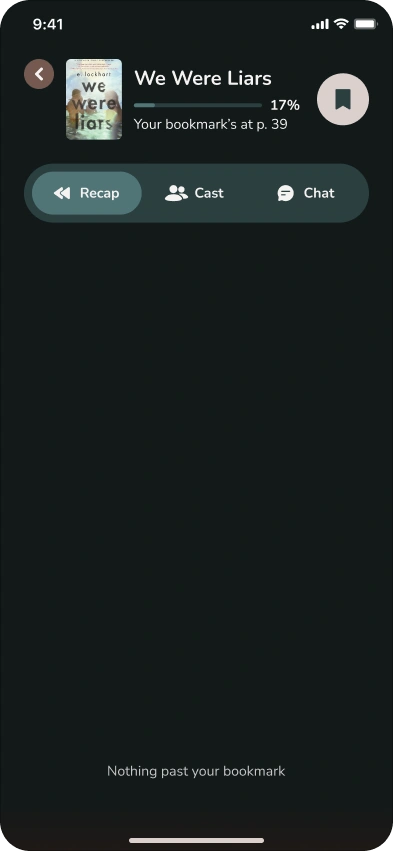
- A cast list with how characters connect.
- A one-line chapter note: what happened and what changed.
- An "open questions" line: what the story is making you wait for.
- A recall before each session: "Where was I, who was there, what did they want?"
What do you lose first in nonfiction?
The structure of the argument and the evidence. You may remember a striking anecdote and forget the point it was illustrating, or remember the conclusion without the reasons.
Methods that suit nonfiction:
- A one-sentence claim per chapter, written from memory.
- One piece of supporting evidence per claim.
- Self-test questions: "What are the three causes the author gives?"
- Spaced reviews of the claims over weeks, since nonfiction is often read to be used later.
Can you make nonfiction more like a story?
Partly. When you summarize a chapter, frame it as a sequence: what problem the author starts with, what they try, what they find. Attach each idea to an example or a person from the book. You are borrowing the structure that makes stories memorable.
Does format matter differently for each?
There is some evidence that it might. A meta-analysis of paper versus screen reading found an overall advantage for paper, but the advantage held for informational texts and mixed texts, not for studies that used only narrative texts.5 If you read nonfiction you need to remember, paper may be worth it. For novels, read in whatever format keeps you reading. The paper versus screen guide has more.
A quick decision table
| You are reading | Protect first | Best habit | Template |
|---|---|---|---|
| A long novel or series | The cast and connections | Cast list, updated per chapter | Cast list sheet |
| A literary novel | Themes and lines you love | Commonplace entries with your own note | Commonplace page |
| Popular nonfiction | Claims and examples | One-sentence claim per chapter, tested later | Chapter log |
| A textbook or manual | Facts, steps, terms | Self-test questions and spaced review | Retrieval questions |
What about books that are both?
Memoir, history written as a story, and narrative science writing sit in between. They borrow the structure of fiction (people, events, consequences) to carry ideas. Use both sets of habits: keep a short cast list for the people, and a one-sentence claim per chapter for the ideas. Ask, at the end of each chapter, what happened and what it was meant to show.
How much effort does each kind deserve?
Match the effort to what you want from the book. A novel you are reading for pleasure needs nothing more than attention; a cast list helps only if the cast gets confusing. A nonfiction book you want to use at work deserves the full routine: closed-book chapter lines, a weekly review and a final page of notes. Most readers do best with a light touch on most books and the full method on a few.
What does a memory routine look like for each?
| Step | Novel | Nonfiction |
|---|---|---|
| Before a session | Recall where the story stood and who was involved | Recall the last chapter's main claim |
| After a chapter | One line on what happened and what changed | One line on the claim and its best support |
| Running list | Cast list: names, roles, connections | New terms and key numbers |
| After the book | Who wanted what, how it ended, what it meant to you | The book's three main claims and one you doubt |
| A week later | Retell the arc from memory, then check | Explain one idea to someone, then check |
Both columns rest on the same two habits: recall before you check, and come back after a gap.3
What about series and long nonfiction projects?
Series fiction adds a problem single novels do not have: the gap between books can be a year or more, and details you need at the start of book three were set up in book one. A few lines written from memory at the end of each book, plus a cast list carried across the series, give you something to review before the next one. Long nonfiction projects, such as reading several books on one subject, have the opposite problem: similar ideas from different books blur together. Keep a commonplace book with a heading per idea, and note which book each entry came from, so you can tell the authors apart later.6 For a book that is both, such as a memoir or a narrative history, use the novel column for the story and add one line for the argument it makes.